
Is Old Québec Walkable? Hills, Stairs & Tips From a Local Guide
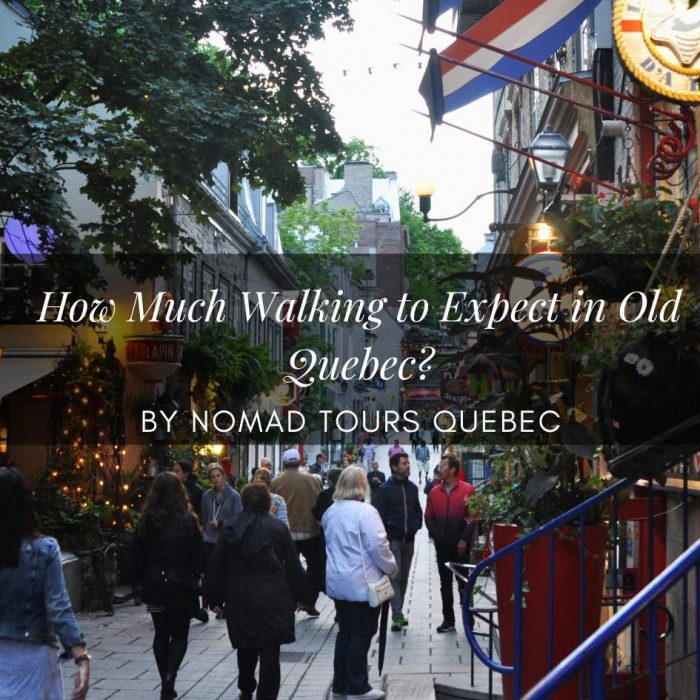
If you’ve seen photos of Old Quebec , with its cobblestone streets, charming castle, and winding alleys, you might already guess that there’s some walking involved. And you’d be right!
Old Quebec is famous for its charm, its history… and yes, its hills. But here’s the good news: it’s not nearly as bad as people think. Locals climb those same streets every day , often with a coffee in one hand or a stroller to push and most of us are still smiling at the top (even if we stop to catch our breath halfway, pas de panique! )

How Much Walking to Expect in Old Quebec City
Old Québec is a very walkable city, and most of its major attractions are within a short distance of one another. It is compact, which makes it very walkable, but it’s also built on two main levels: the Upper Town (Haute-Ville) and the Lower Town (Basse-Ville). The elevation between them is around 60 meters (200 feet) not mountain-level steep, but enough to make you feel it in your calves after a day of exploring.
A full day of sightseeing usually means around 8,000 to 12,000 steps, depending on how much you wander. The real challenge isn’t the distance , it’s the up and down. Streets like Côte de la Montagne, Côte du Palais, or the famous Breakneck Stairs (l’Escalier du Casse-Cou) have earned their reputation.
But don’t worry , it’s all part of the experience. Every turn rewards you with a new view, a hidden courtyard, a shop or a cozy café. And if you pace yourself, you’ll enjoy it without feeling rushed.
How big is Old Quebec?
The total area of Old Quebec (Vieux-Québec) , meaning the historic district within the city walls and the adjacent Lower Town, is about 135 hectares, or roughly 1.35 square kilometers (0.5 square miles). Old Quebec is very small compared to all of Quebec City. The city covers about 485 square kilometers, or roughly 187 square miles.
So, compared to Old Quebec’s 1.35 km², the historic district makes up less than 0.3% of the city’s total area!
The Truth About the Hills
Visitors often imagine Old Quebec as one giant slope but that’s not the case, non non! Once you’re in the Upper Town, most streets around Château Frontenac, the Citadel, and the Parliament are fairly flat. The Lower Town, around Place-Royale and Petit-Champlain, is also easy to walk , it’s just that getting from one to the other involves a climb (or a little help, as I’ll see below).
Outside the old city walls, many neighborhoods like Saint-Roch, Limoilou, or Montcalm are much flatter and very pleasant for a stroll. If you want a break from the hills, these areas are perfect for exploring local life without the cardio workout!
Tips to Make It Easier
1. Start From the Top (and go downhill)
If you’re visiting both Upper and Lower Town in one day, start your walk near Château Frontenac or anywhere in the Upper Town and make your way down to Petit-Champlain. The route is scenic, gentle, and you’ll end by the St-Lawrence River.
2. Take the Funicular
The Funicular connects Dufferin Terrace (next to the Chateau Frontenac) to the Lower Town (on Petit Champlain Street) in about 1 minute. It’s fun and offers a great view, but it costs around $7 CAD per ride. Note that the Funicular only accept cash (no credit cards) but there is an ATM on each station (up and down). They accept both Canadian Dollars and US Dollars but $7 is $7 as they don’t take for account the exchange rate. They also, most of the time, give the change back in Canadian Dollars ( which is normal, you are visiting Canada after all!)

3. Take The Local Bus
A more local option? Hop on bus no. 5 or no. 6! It connects Lower town and Upper Town and a single ride costs just $4 CAD. You can take the bus from the ferry terminal (in the Lower-Town) which is close to Petit-Champlain Street and Place Royale and get off at the City Hall (Upper-Town). It’s a great way to give your legs a rest and see a bit more of the city from a local’s perspective. You can pay directly on board with cash (the bus driver doesn’t give change) or use the RTC Nomade app to pay for tickets directly on your phone. Some hotels might also have 3-days bus passes for their clients so ask your hotel concierge.
4. Wear the Right Shoes
Cobblestones are beautiful, but they’re not friendly to heels or thin sandals. A good pair of sneakers or walking shoes will make all the difference. Your feet will thank you by the end of the day!
5. Take Breaks : You’re in Quebec City!
Don’t rush it. Stop at a local café, have a ice cream or a cocktail, do some shopping… locals do it too!
6. Let a Licensed Tour Guide Lead the Way
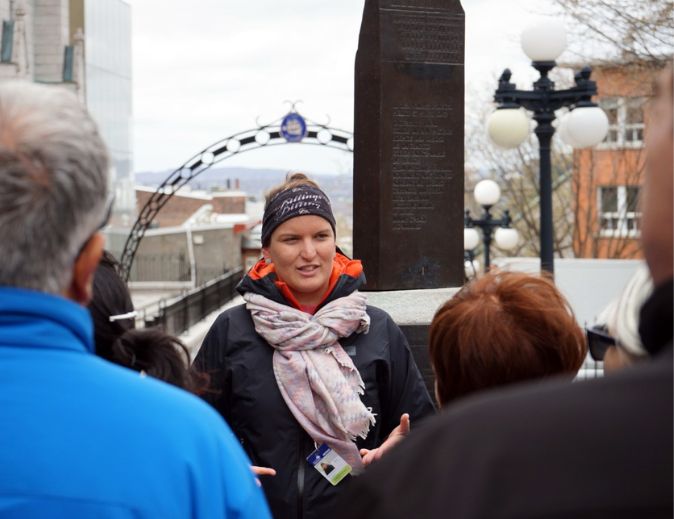
When I give tours in Old Quebec, I always plan routes that balance beauty and comfort. I include stops to rest, take photos, and share a few petits secrets you might otherwise miss. Sometimes the best shortcut isn’t on Google Maps, it’s the one only locals know!
Private Old Quebec Walking Tour
Explore the best of Québec City in just 2½ hours! This private walking tour covers the must-see highlights of both Upper and Lower Town, from the City Fortifications to Place-Royale.
Who Might Find the Hills Tricky (and How to Adapt)
If you’re traveling with young children, seniors, or anyone who prefers a slower pace, you can absolutely enjoy Old Quebec, just plan wisely.
- Start your visit in the Upper Town to avoid climbing.
- Use the Funicular or buses
- Take shorter guided walks or split your exploration into two half-days.
Trust me, even people who thought the hills would be “too much” often tell me afterward, “It wasn’t bad at all!”

Is Old Québec Accessible for Visitors With Limited Mobility?
Old Québec is a beautiful place to explore, but it can be challenging for visitors with limited mobility. Between the steep hills, uneven cobblestone streets, and numerous staircases, getting around isn’t always easy, especially for wheelchair users or those who have difficulty walking long distances. The good news? With a little planning, you can still enjoy many of the city’s highlights! The funicular is a great way to travel between Upper and Lower Town without tackling the steep hills, and some areas are easier to navigate than others. My advice? Take your time, plan your route carefully, and don’t hesitate to ask locals for tips! Booking a private guided tour can definitely make a difference, too! Over the years, I’ve had the pleasure of guiding many guests who use wheelchairs, a scooter or have limited mobility. Thanks to my experience as a local guide, I’ve learned which streets and steep hills are best avoided and how to plan routes that make exploring Old Québec easier and more enjoyable. After all, everyone deserves to experience the beauty and history of Québec City at their own pace!
How Locals Handle the Hills
For us locals, those slopes are part of daily life ,our free gym membership, as we like to joke. You’ll see people walking up Côte de la Fabrique or Côte du Palais with groceries, chatting as if it’s nothing. We might slow down halfway, maybe pretend to admire the view while catching our breath, but it’s never a big deal.
And that’s the spirit to bring to your visit: take your time, look around, and enjoy the city’s rhythm.
Final Thoughts
Old Quebec’s hills might make your heart beat a little faster, but they’re part of what makes the city unforgettable. With comfortable shoes, a few strategic breaks, and maybe a friendly guide to lead you along the easiest paths, you’ll see why walking here is the best way to truly feel Quebec City.